A Sound Making Object
Ladies and gentlemen, I present to you the Somatic Symphony. (Gestures widely)
A ‘musical’ rendition of the human sexual response cycle, brought to us by William Masters and Virginia Johnson. Their groundbreaking book, which detailed the four phases of human sexual response (excitement, plateau, orgasm, and resolution), based on laboratory research with over 600 volunteers, revolutionized the scientific understanding of sex, contributed to the sexual revolution of the 1960s, and paved the way for sex therapy.
The Design Process:
While not required for the assignment, I chose to follow a specific theme to guide my design. I found that having too many choices led to overthinking, so I used this theme to narrow them down. This helped me to stop ruminating on every possible material and instead focus on picking the best mechanical metaphors. Here were the original sketches:
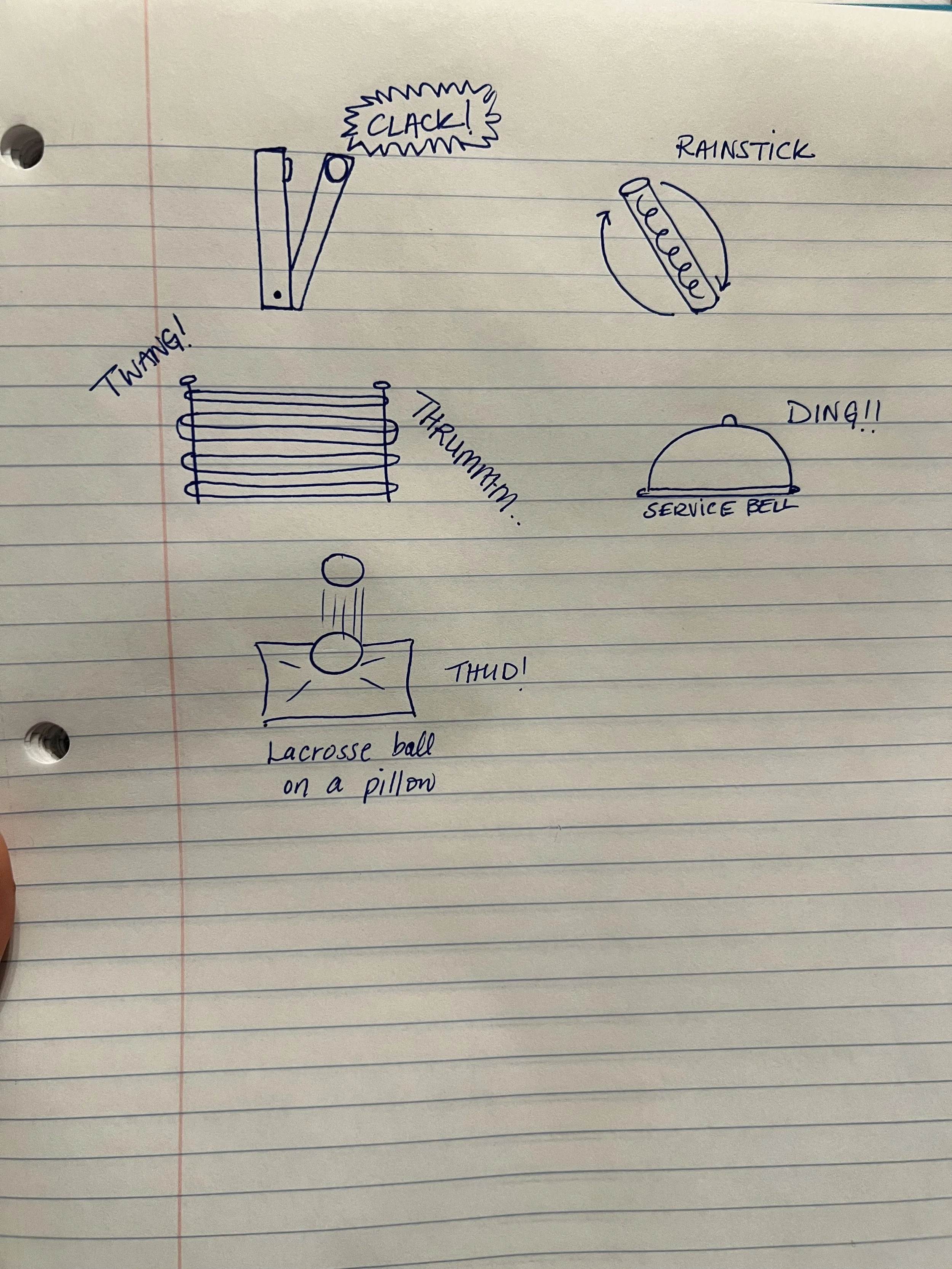
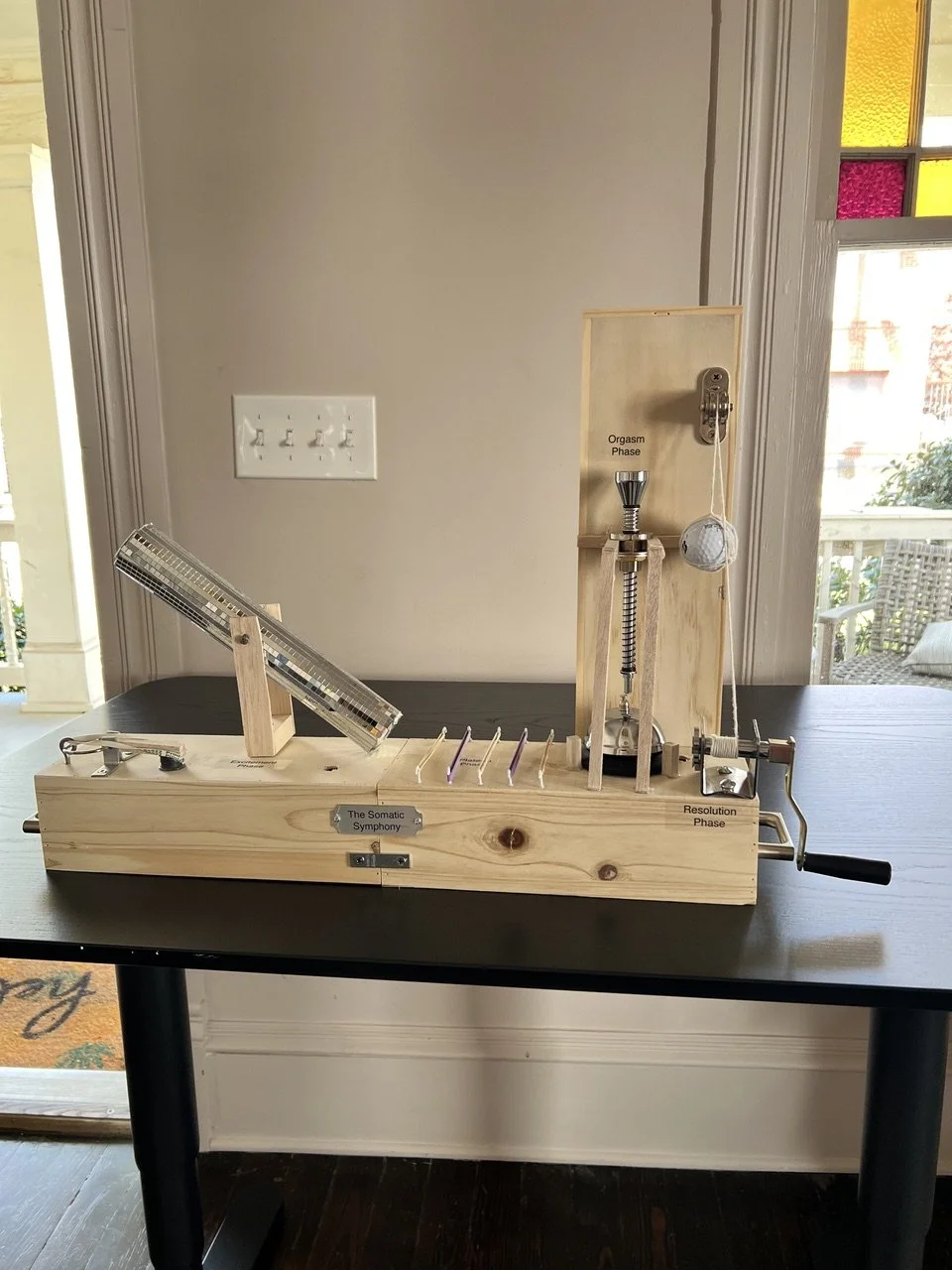
The box is broken down into five parts:
The Magnetic Attraction: This is not a phase of the official cycle. Before the actual sexual response cycle begins, there is often an initial attraction. By pressing the wooden lever, two magnets snap together. This represents the first “click” or magnetic attraction you feel toward another person.
Excitement: Once the cycle begins, the body reacts. Turning this rain stick, covered in disco ball stickers for extra metaphorical “excitement,” creates a rushing sound like blood flowing, symbolizing the physical rush of early arousal.
Plateau: As things continue, the body builds up tension. By plucking the tight rubber bands, you can feel and hear the resistance. It shows how the muscles and nervous system tighten as you approach the point of no return.
Orgasm: This is the peak release. You pull back a pinball plunger and let it go so it hits the bell button directly. The “ding” is a single, clear sound that represents the sudden and explosive release of all that built-up energy.
Resolution: To end the cycle, the body has to wind down. You use the crank to slowly raise a golf ball tied to a string. As you turn the handle, the winch makes a rhythmic clicking sound, like a heart rate slowing down. Finally, the ball drops onto the box, representing the body “flopping” back into a resting state and finding comfort.
The Experience:
The Somatic Symphony and I have become besties. We laughed, we fought, we cried, and we fell in love. I spoke about this project with everyone who would listen: my husband, my kids, my mom, and the girlies at my gym. They all watched me cycle through crumbling to the floor over frustration to moments of eureka. This assignment truly pushed me out of my comfort zone, as my medium of choice is more fiber-based, given my background in fashion design. However, there is something within me that fantasizes about more 3D work that would survive the elements.
As I roamed the aisles of Lowe’s, imagining the sounds various tools, hinges, and chains could make, I bought many items, but nary a hinge made it into the box. So, I made my way to the place that never disappoints, Michael’s Craft Store, where I found materials that fit within my current understanding of my abilities. Audibly, I said,
“What’s this? Boxes, balsa wood, twine? Baby! It’s all here!”I had a basic plan for what I wanted to build, but I really needed to experiment with what I bought to bring it to life. Balsa wood, as it turns out, does not like holes; it will split. So, I found myself cutting and building ideas over and over until I realized I would have to glue them. I don’t have the patience for wood glue to dry, so I brought out the hot glue gun. It may not be as sturdy as wood glue, but it will do for now.
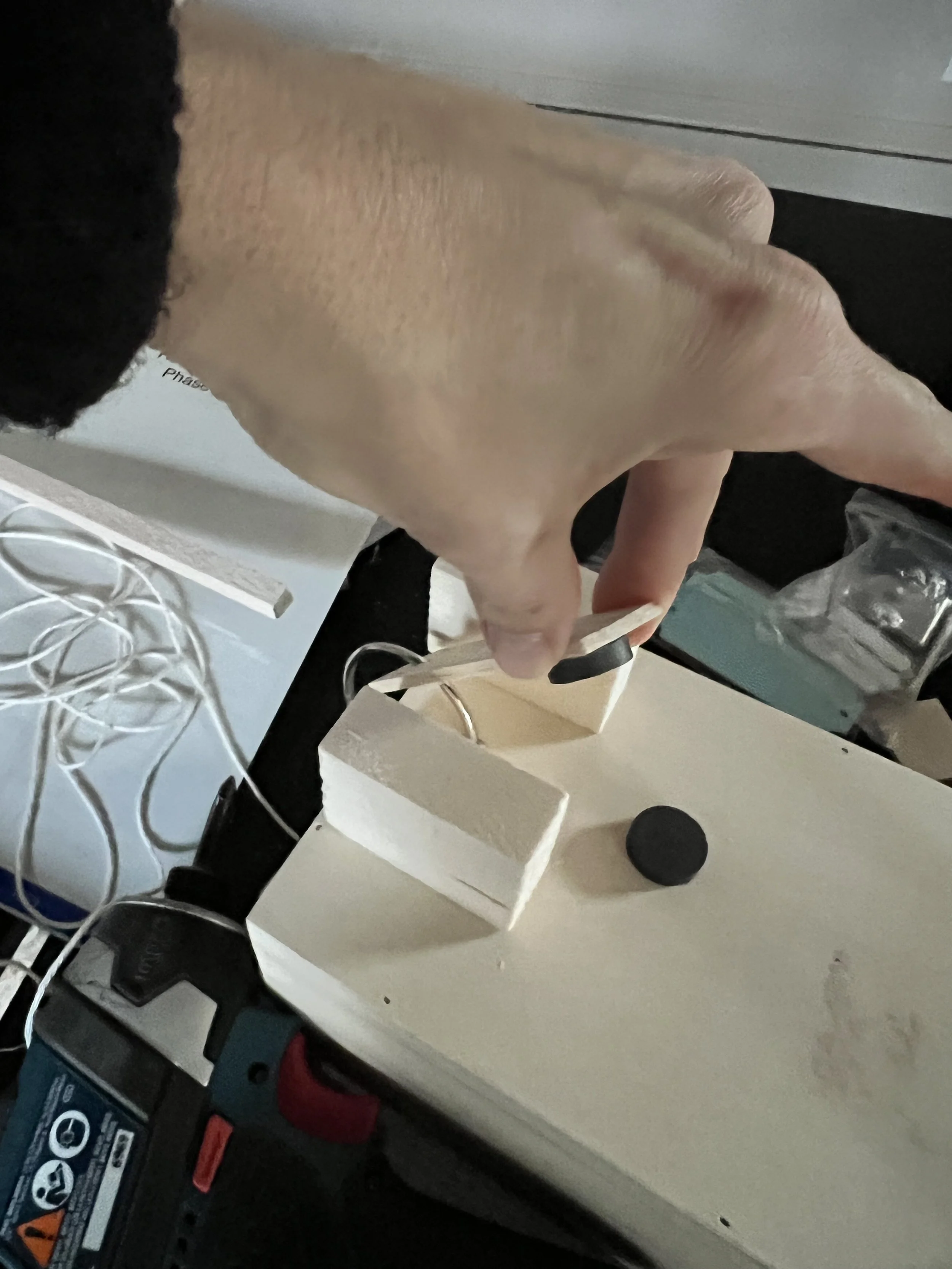
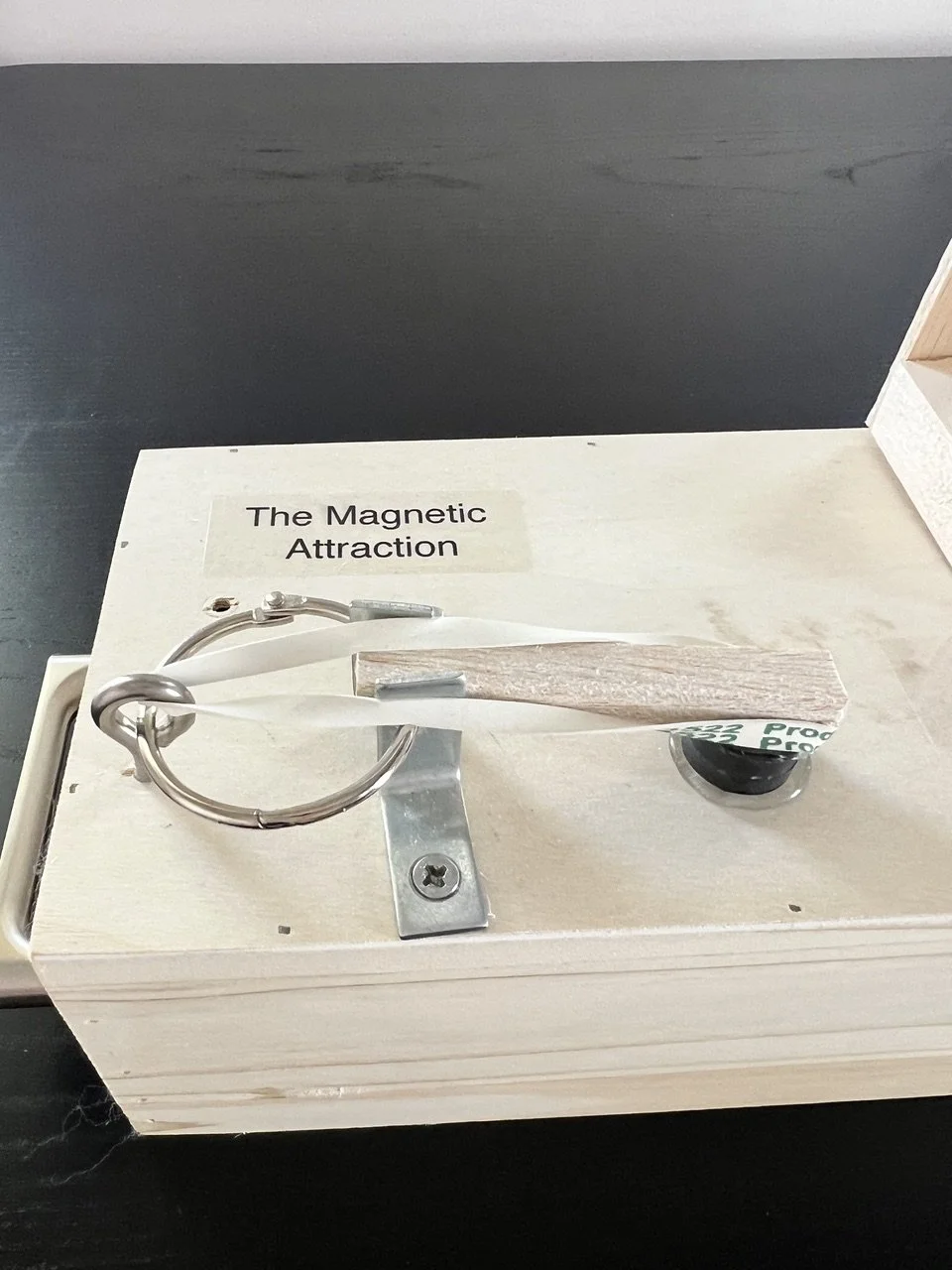
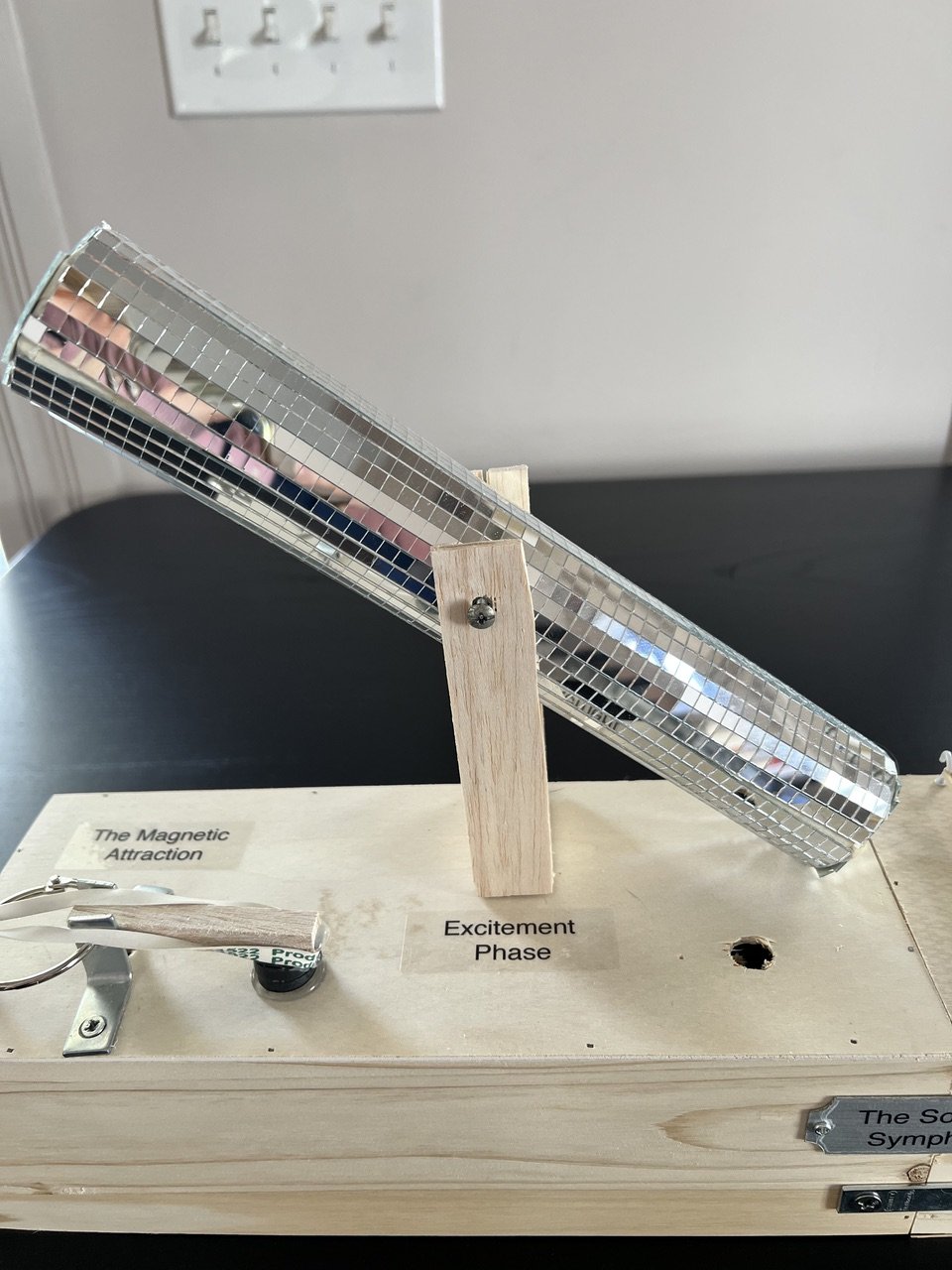
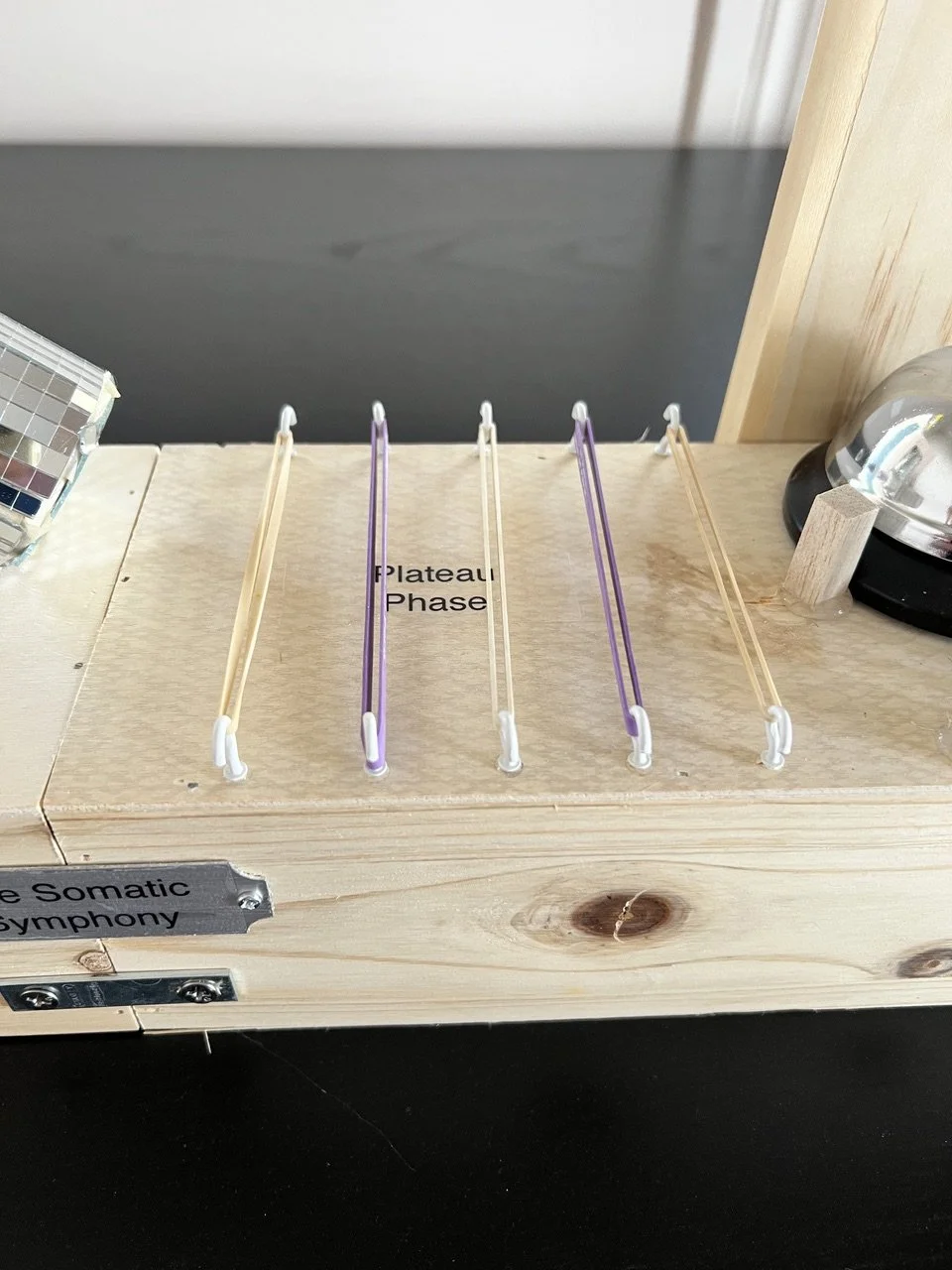
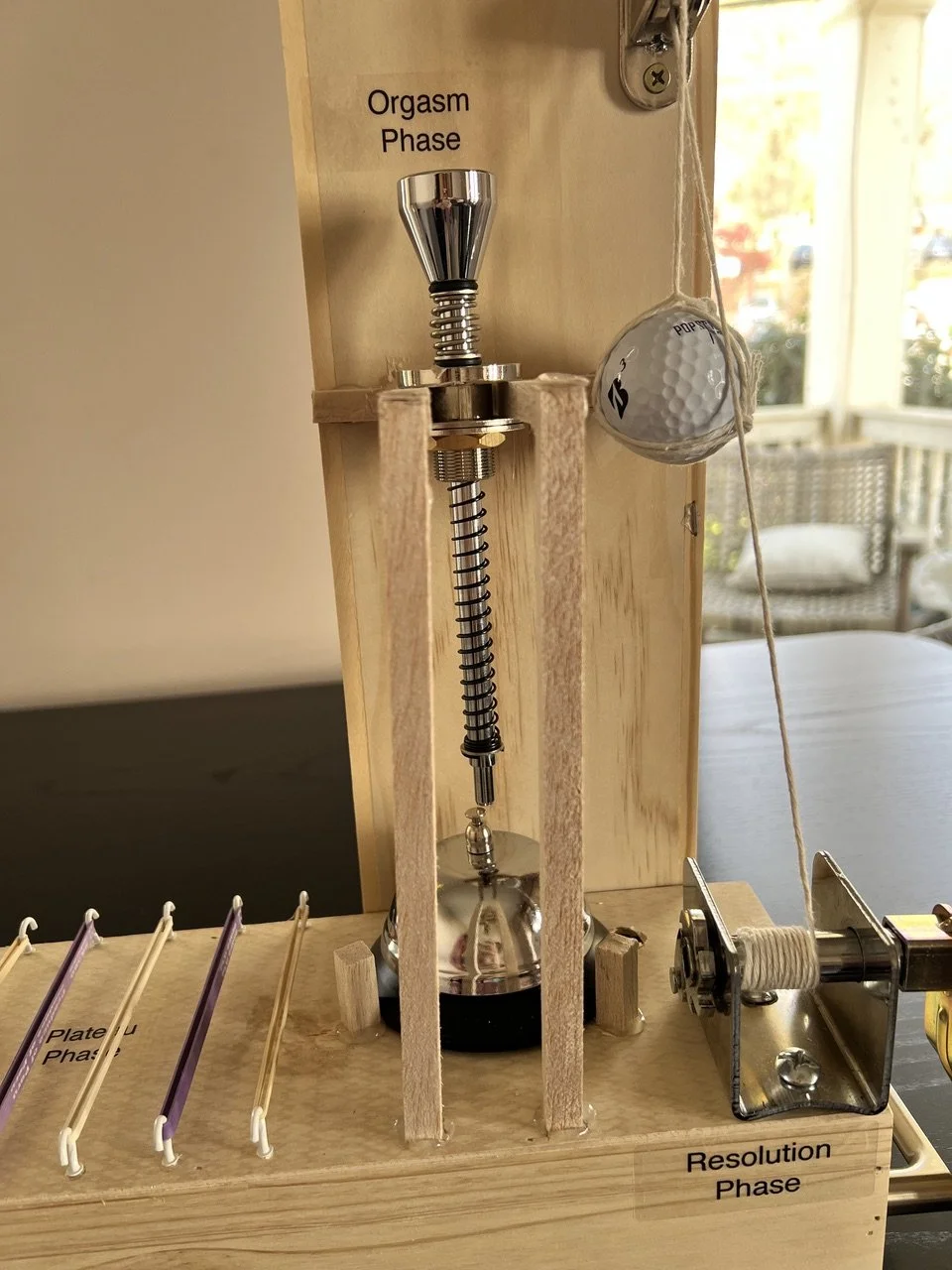
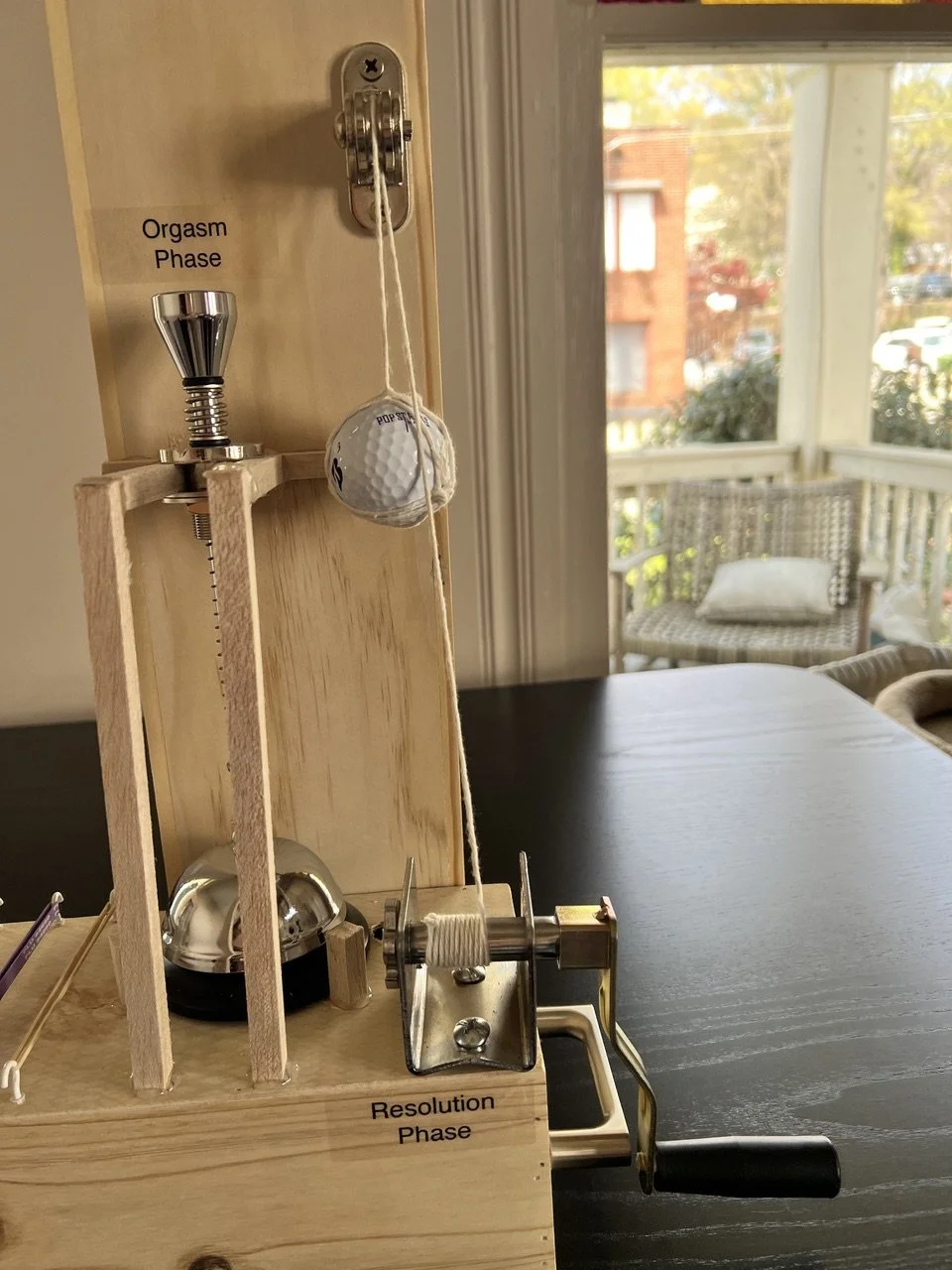
Aesthetically, I prefer premade items to assemble. I’m pretty proud of how the magnetic attraction turned out. In the first photo, I’m showing the first idea I had with the magnetic attraction. I struggled with the direction and with making the magnets hit the same place repeatedly, as the original setup would swing about. A stark realization that I. am. not. an. engineer. After some tinkering around with it. I found a better way to make this meet exactly every time. Moving on, I have had kids, and with kids come many cardboard-tube crafts.
The rain stick, built with a cardboard tube and a spiral of aluminum foil and lentils within, pivots from a balsa wood structure and a screw, which was fine. But it really came alive when I added the disco ball stickers, though now the sound is more muffled. As we move through the cycle, we add the tension that builds during the plateau phase.
I’m still a little on the fence about the rubber bands, as the idea seems too common and juvenile for the assignment. I am happier, though, with the change in application: from wrapping rubber bands around a balsa wood frame to using hooks, as the rubber bands caused the frame to warp, and the hooks are more stable, maintaining the use of sturdy metal throughout the box.
For the orgasm phase, I really struggled with the idea of something big enough to explain the feeling, once we realized that I was sort of cheating with the item being made to make sound in the first place. Creating a new striking mechanism was challenging, since I initially gravitated toward a mallet for the user, but that didn’t feel intuitive for the bell—but a pinball plunger sure is, and dare I say, the first item that seems the most intuitive to explain that “this contraption might be here to make noise with.”
And to the right of that is the resolution phase. The original plan for this phase was for a lacrosse ball to fall onto a pillow. How would I make a ball fall? With a string and a pulley, ya? How would I raise this ball? These questions led me down a rabbit hole of crank types on Amazon and raised many questions about where I had found such an item.
As they say, the more you suffer, the more dedicated you feel to the cause. I truly struggled every step of the way to realize this idea, but I’m incredibly proud of how it turned out. The process was not without its heartbreaks; for instance, I was devastated when I went to install the handles and accidentally broke the pieces holding the pinball plunger in place. However, rebuilding that section ultimately made it sturdier than the original design—there is surely some deeper poetic meaning there.
Beyond the structural repairs, I focused on the functional details. I installed handles to carry the box, carefully positioning them to ensure the crank wouldn’t hit them as it turned. To boost volume, I also drilled holes in the base to act as a resonator box, though I’m not entirely convinced the sound is any louder. Finally, I added labels to guide the user through the four phases of the sexual response cycle. I’m not so naive as to think every user will be familiar with the cycle, but the labels serve as a necessary roadmap for the experience.
Directions
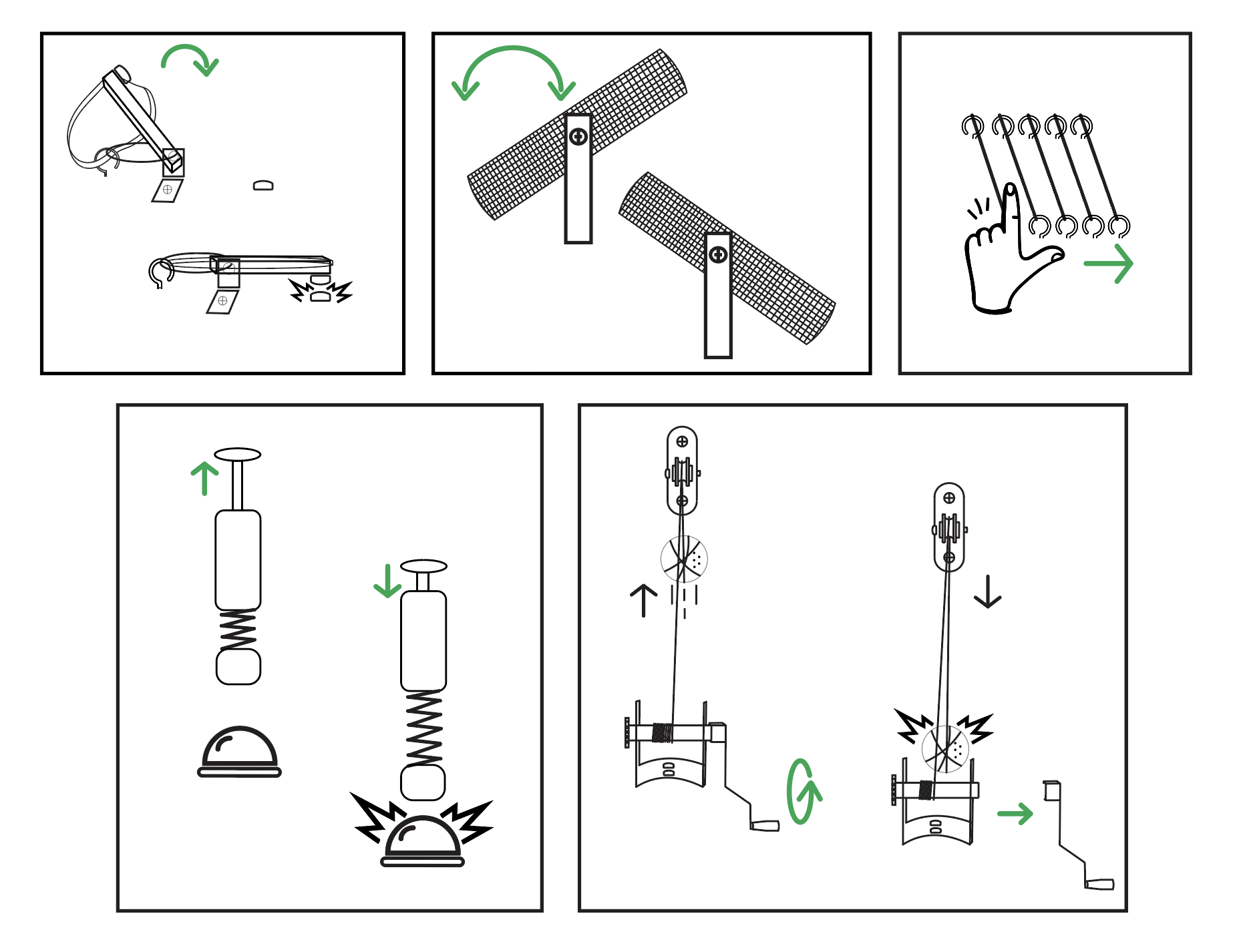
The second part of this assignment was to include directions on the use of my Somatic Symphony without the use of alphanumeric communication. Before this class, I had zero experience with Illustrator and was…I don’t know if “scared” is the right word to describe how I felt, but the idea of learning a new program to complete this assignment felt daunting. So, I gravitated to a site dedicated to creating icons, and when I couldn’t find what I was looking for there, I asked AI to generate it for me—I’m looking at you, pinball plunger! After my critique, I realized that I can do hard things and Illustrator {shouts out to the void}
“WON’T GET THE BEST OF MEEEE!”
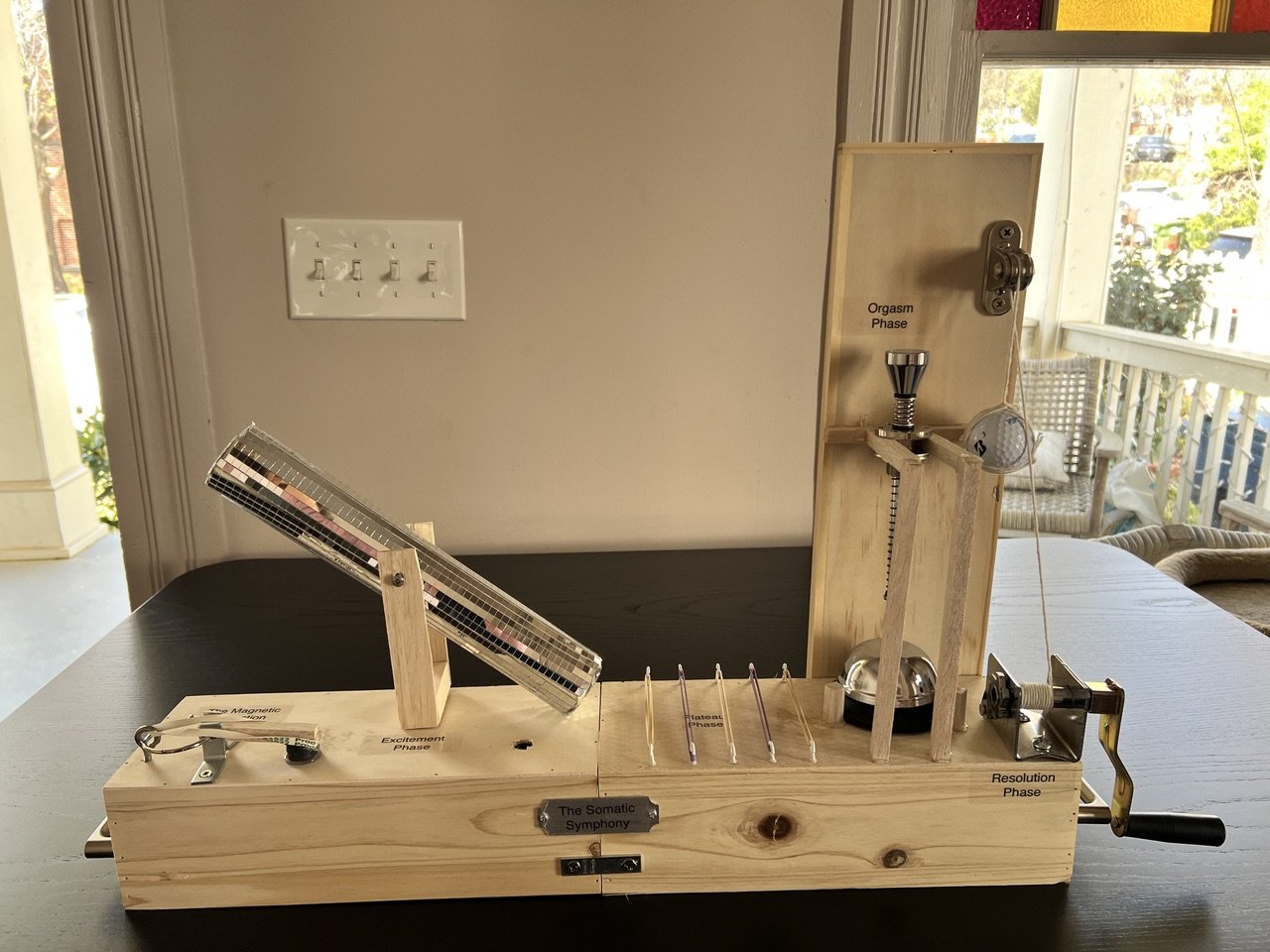
So, I spent the next weekend attempting to draw everything out with lines, circles, and rectangles. And as tedious as it was, I started to enjoy the process. I did a lot of googling on how to make things look 3D, analyzing perspective, making changes, grouping, and ungrouping, and showing my family, who are brutal with their feedback. And I think I did a better job. I’m looking forward to the class feedback.Unfortunately, I saved the new file over the old one with just the icons, so I don’t have a before-and-after of the instructions. But you can compare the directions with the photo of the fully built sound-maker. What do you think? Do you think an alien could figure out how to use my Somatic Symphony should they stumble upon it?
Composition
Next up in this looney bird assignment is to create a composition so that the alien could then play a song, if you will. After much deliberation, I thought using the existing instructions as the music notes would be best, rather than creating a new language or colorway to guide the user.
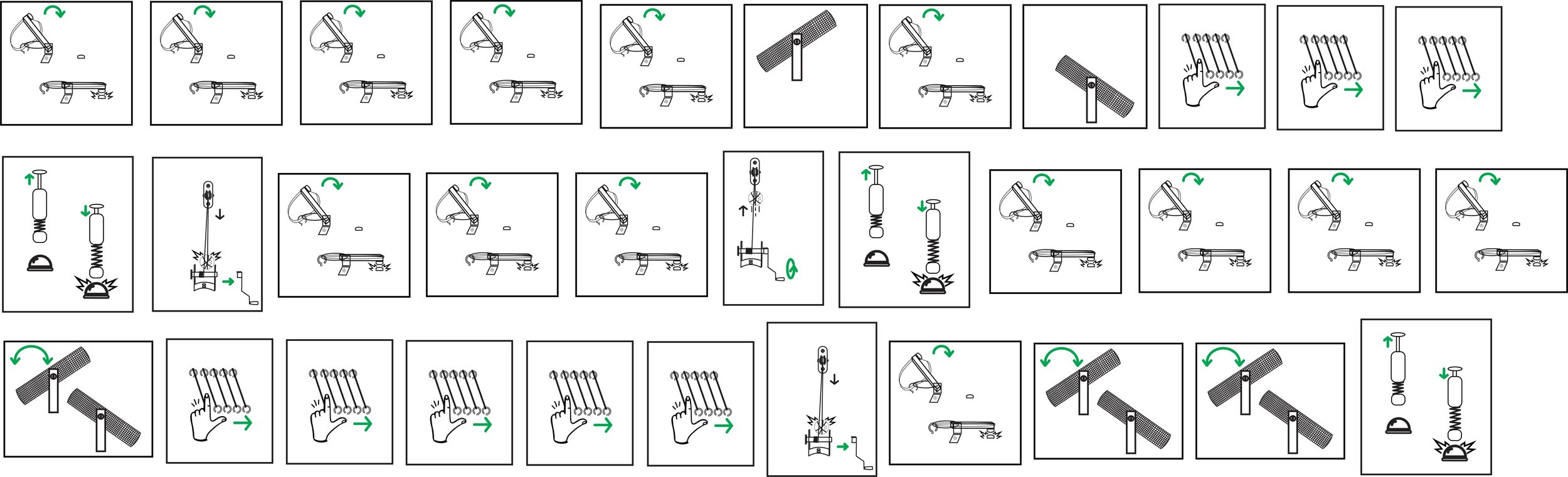
And just when you thought this assignment couldn’t get any funner *in the voice of Harry from Dumb and Dumber, I performed said composition on the Somatic Symphony, including a little sarcasm from a reel I found online. It’s a banger!
